
Prospecting is the first step in every sales process. But finding qualified leads, verifying their contact details, and starting conversations takes time. Sales prospecting tools can help. They automate manual research, provide accurate data, and help you engage buyers at the right time. These tools connect your sales strategy to your daily work.
This guide provides a practical analysis of 12 top platforms. It is organised into clear categories like lead databases, email automation, and data enrichment. Our goal is to give you a clear framework to build your ideal sales technology stack. This information is for small businesses and large enterprises alike.
You will find a detailed breakdown for each tool:
A summary of its main function.
Key features that impact sales workflows.
Pros and cons based on real-world use.
A "best for" recommendation for different teams.
Pricing information and available plans.
Each review is designed to be easy to scan. It includes screenshots and direct links so you can evaluate options quickly. We compare tools and suggest effective combinations. This article will help you choose the right sales prospecting tools to support your team in hitting its targets.
1. LinkedIn Sales Navigator
LinkedIn Sales Navigator gives you direct access to the world’s largest professional network. This makes it an essential sales prospecting tool for B2B teams. Its main strength is its advanced search filters. You can pinpoint ideal customer profiles based on seniority, company size, geography, and job function.
The platform helps you sell based on signals. You can set up alerts for job changes, company news, and prospect content. These triggers create timely reasons to start a conversation. For account-based strategies, you can create and save account lists. These lists update automatically with new hires or activity. This workflow helps reps monitor target accounts and identify key decision-makers.
Key Details & Pricing
Best for: AEs and SDRs who need accurate B2B contact data and career change signals. It is fundamental for teams that use social selling.
Pros: High B2B data accuracy; integrates directly into a rep’s LinkedIn workflow.
Cons: Seat-based pricing can be costly for large teams; InMail message effectiveness varies.
Pricing: Starts with the Core plan at £79.99/month. The Advanced and Advanced Plus tiers offer CRM sync and team features.
To use Sales Navigator effectively, pair its insights with a structured outreach plan. For example, use a job change alert as a trigger to send a personalised connection request and follow-up message. You can explore social selling strategies on LinkedIn to turn these signals into meetings.
Website: https://business.linkedin.com/sales-solutions
2. Apollo.io
Apollo.io is an all-in-one platform. It combines a large B2B contact database with engagement tools. Its key advantage is bundling data, sequencing, and a dialler in one interface. This makes it one of the most cost-effective sales prospecting tools for teams looking to simplify their tech stack. This integration lets reps find prospects, enrich their data, and add them to outreach sequences without switching apps.
The platform is designed for quick setup. Sales teams can build specific contact lists using filters like technology used, funding, and hiring intent. From there, they can enrol prospects into automated email and call sequences directly in Apollo. It integrates with major CRMs like Salesforce and HubSpot, so activities are logged automatically. This workflow saves administrative time for SDRs and AEs.
Key Details & Pricing
Best for: SMBs and mid-market sales teams who need a unified platform for lead generation and outreach.
Pros: Clear pricing and quick setup; good balance of data and outreach features.
Cons: Credit overages can increase costs with heavy use; international dialler support requires higher-tier plans.
Pricing: Offers a free plan with limited credits. Paid plans start with Basic at $49/user/month. Professional and Organisation tiers add more features and higher credit limits.
To get the most from Apollo, create a clear process for building lists and personalising sequences. You can learn more about effective sales prospecting to build a foundation that takes full advantage of the platform.
Website: https://www.apollo.io
3. ZoomInfo SalesOS
ZoomInfo SalesOS is an enterprise-grade B2B intelligence platform. It is designed for go-to-market teams that need deep, accurate company and contact data. Its value comes from its large database, which includes direct-dial phone numbers, verified emails, and detailed org charts. This allows sales reps to connect directly with key decision-makers.
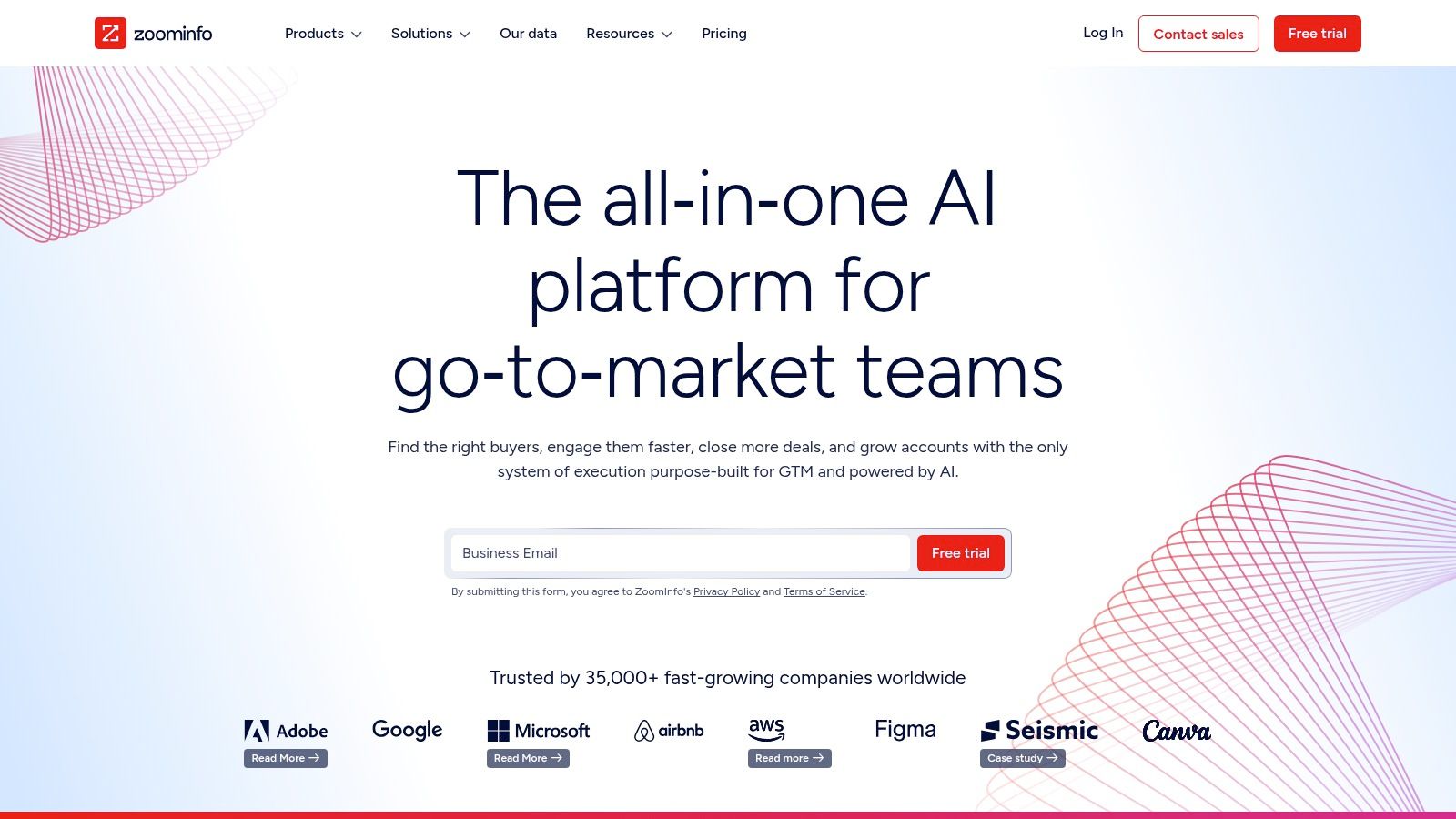
The platform also provides intent data. It flags companies that are actively researching solutions like yours. This helps teams prioritise their outreach. Other features, like identifying anonymous website visitors, turn inbound interest into actionable leads. For larger organisations, SalesOS serves as a central data foundation that enriches CRM records. This makes it one of the most robust sales prospecting tools for teams needing global coverage.
Key Details & Pricing
Best for: Enterprise GTM teams and RevOps departments that need a single source for B2B data, intent signals, and engagement workflows.
Pros: Broad and deep dataset with strong coverage of direct dials; add-on ecosystem covers many GTM needs.
Cons: Pricing is quote-based and can be a significant investment; some users report a variable experience with add-on products.
Pricing: Custom-quoted based on user count, feature access, and data credits. An annual contract is typically required.
Website: https://www.zoominfo.com
4. Cognism
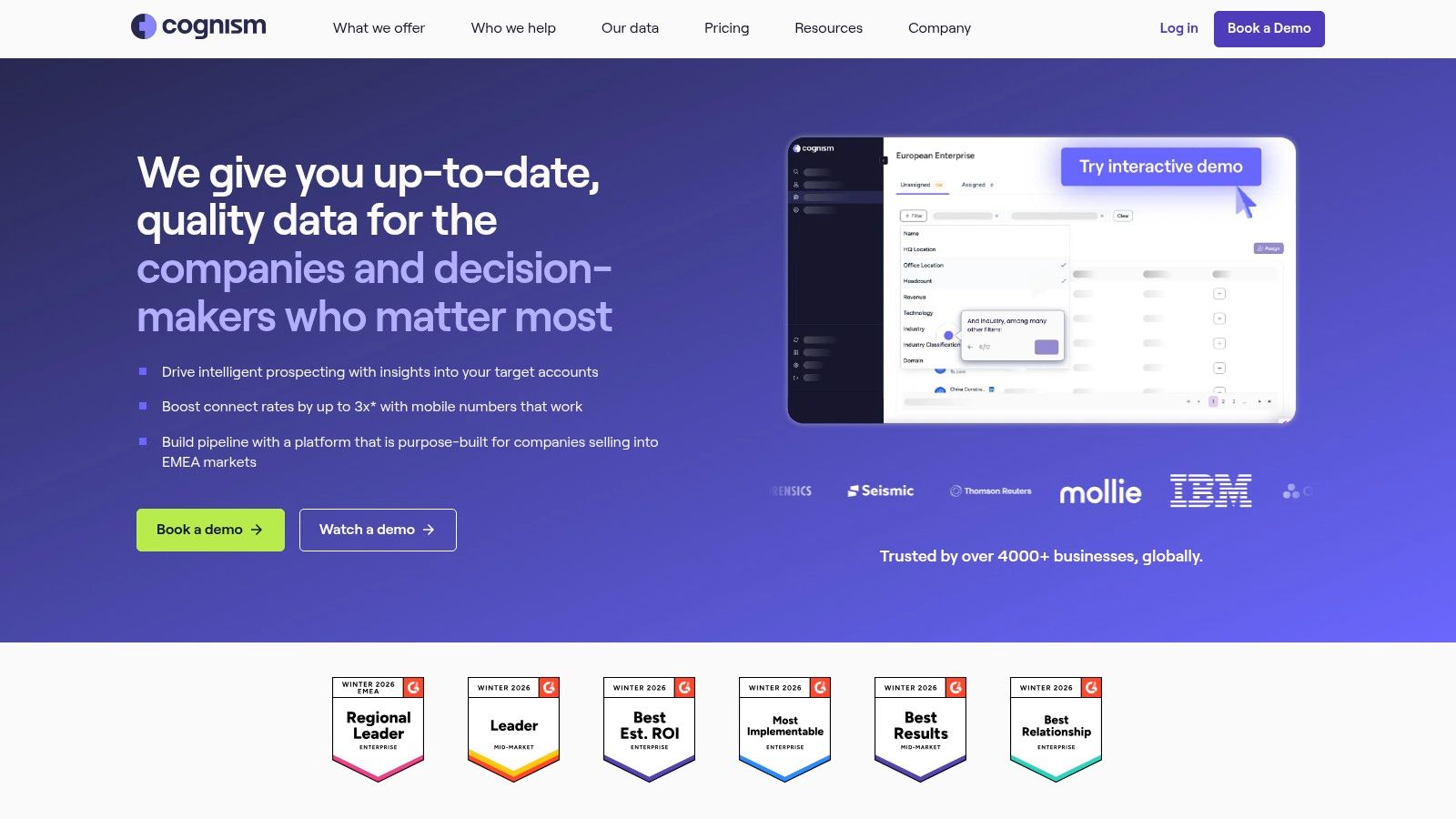
Cognism is a global sales intelligence platform with a strong focus on data compliance and accuracy, especially in EMEA. It stands out with its phone-verified mobile numbers, called Diamond Data. An in-house research team manually verifies this data. This process increases connect rates for sales teams that rely on phone outreach.
The platform's GDPR and CCPA-compliant framework helps organisations minimise legal risk. Cognism scrubs its database against global Do-Not-Call (DNC) lists. This provides an added layer of security for outbound campaigns. As one of the more reliable sales prospecting tools for compliant data, it allows teams to build lists with confidence.
Key Details & Pricing
Best for: Sales teams with a strong presence in EMEA or those prioritising GDPR compliance and high-quality, verified mobile phone data.
Pros: Excellent data accuracy in Europe and a firm commitment to compliance; phone-verified numbers can improve connect rates.
Cons: Custom, annual pricing can be a significant investment; some users report mixed data quality for the North American market.
Pricing: Cognism uses custom pricing based on licence count and package specifics. An intent data add-on is also available for an additional cost.
A practical way to use Cognism is to integrate its verified contact data directly into your sales engagement platform or CRM. This step ensures your SDRs always work with accurate, compliant information. The result is less time wasted on wrong numbers and more time in valuable conversations.
Website: https://www.cognism.com
5. Lusha
Lusha is a contact data provider known for its simple credit-based system. It reveals accurate B2B phone numbers and email addresses. Its core value is simplicity and speed, making it one of the most efficient sales prospecting tools for SDRs who need to build lists quickly. The browser extension is a key part of the workflow. It allows reps to find contact information on LinkedIn profiles or company websites with one click.
This tool is useful for enriching existing lists or CRMs with missing data. Lusha verifies its data through a community-based process and proprietary algorithms. For teams focused on high-volume prospecting, the ability to quickly pull contacts and push them into a CRM is a major time-saver. This helps reps spend more time selling.
Key Details & Pricing
Best for: SDRs and sales teams that need a fast and easy way to source direct dials and emails for high-volume outreach.
Pros: Easy to implement with quick results for SDRs; flexible credit system with rollover on some plans.
Cons: Data depth can vary by region and industry; advanced admin controls are on higher-tier plans.
Pricing: Offers a free plan with 5 credits per month. Paid plans start with Pro at $29/user/month. Premium and Scale tiers offer more credits and features like CRM integrations.
To use Lusha effectively, activate the Chrome extension and integrate it with your CRM. This workflow ensures that every revealed contact is immediately added to your system, which prevents manual data entry errors.
Website: https://www.lusha.com
6. Clay
Clay is a data orchestration and enrichment platform. It connects with over 100 data providers. This allows sales teams to build customised and automated prospecting workflows. Its main strength is aggregating data from multiple sources, running AI-driven research, and auto-personalising messages at scale.
For teams focused on deep personalisation, Clay's "recipes" and AI agent, Claygent, can research prospects and find specific company details. It can even draft relevant opening lines for emails. This approach centralises the research and enrichment process. Normally, this work would require several different sales prospecting tools and manual effort. It is effective for SDR ops and agencies that design complex, repeatable prospecting motions.
Key Details & Pricing
Best for: SDR operations, agencies, and advanced sales teams needing to blend multiple data sources for highly personalised, automated outreach.
Pros: High flexibility by combining 100+ data sources; strong capabilities for AI-driven personalisation and workflow automation.
Cons: Requires technical skill to design effective workflows; credit usage must be planned carefully to manage costs.
Pricing: Starts with a Free tier (250 credits). Paid plans include Explorer at $149/month (10,000 credits), Pro at $349/month (30,000 credits), and Scale at $800/month (80,000 credits). All paid plans support unlimited users.
Website: https://www.clay.com
7. Clearbit (Breeze Intelligence via HubSpot)
Clearbit is a leader in B2B data enrichment. Its acquisition by HubSpot integrated its power directly into the CRM as Breeze Intelligence. This makes it one of the most effective sales prospecting tools for teams already in the HubSpot ecosystem. Its primary function is to automatically enrich incoming leads and contacts with over 100 data points. This turns a simple email address into a detailed company profile.
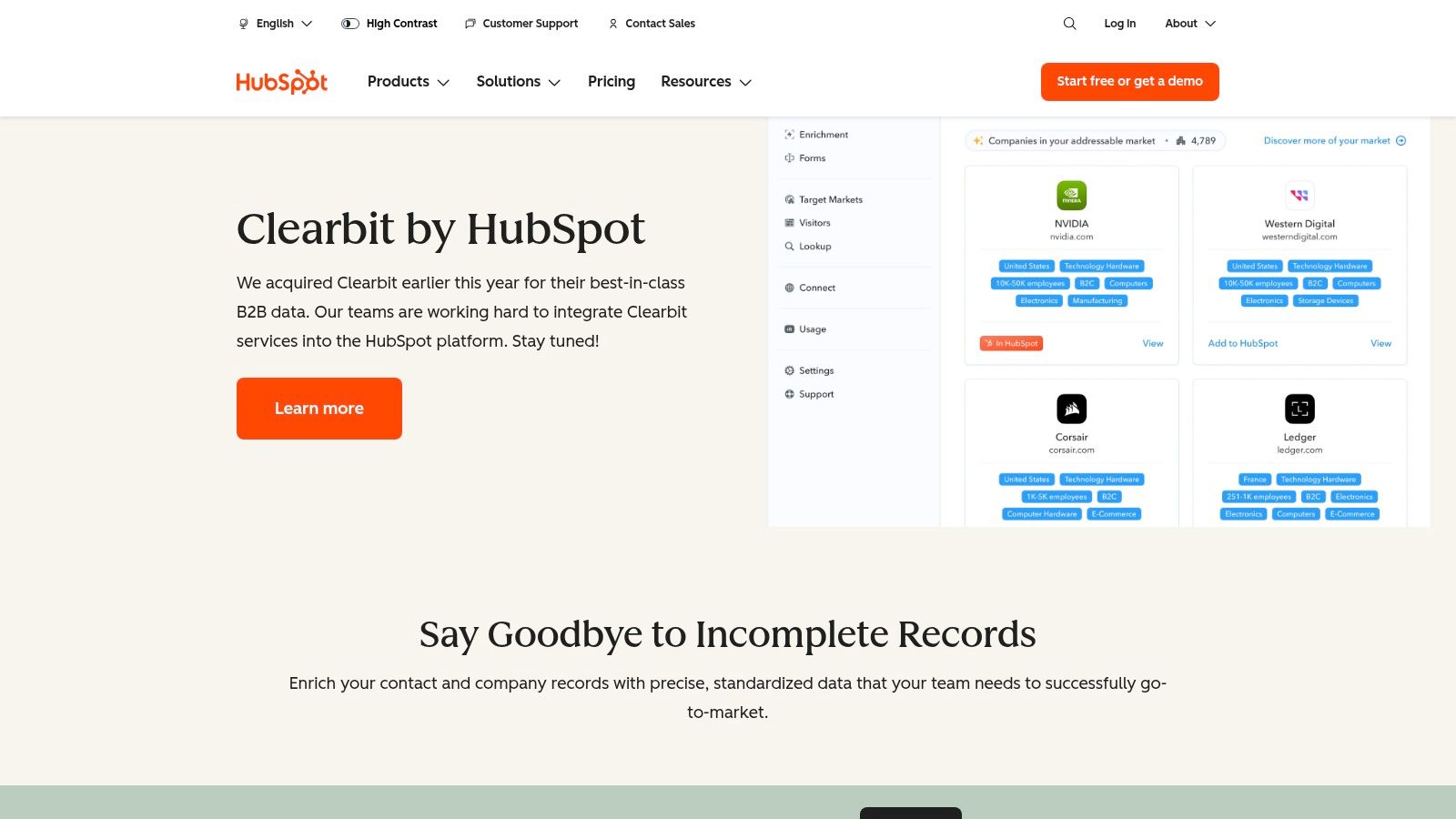
The platform improves operational efficiency. By enriching data in real-time, it allows sales teams to shorten website forms, which can increase conversion rates. The enriched data also fuels more accurate lead scoring and faster routing to the correct sales representative. This ensures high-value leads are actioned immediately without manual work.
Key Details & Pricing
Best for: Sales and marketing teams using HubSpot who need real-time data enrichment to improve lead qualification and routing.
Pros: Native HubSpot integration provides a smooth user experience; real-time data updates improve automation accuracy.
Cons: Its use is limited for organisations not using HubSpot; pricing is not public and is sold through HubSpot.
Pricing: Available as an add-on for paid HubSpot subscribers. Contact HubSpot for specific pricing details.
Using enrichment effectively requires a clear understanding of your ideal customer profile. To refine your targeting, you can find prospecting strategies for similar technologies.
Website: https://www.hubspot.com/products/clearbit
8. Hunter
Hunter is an email discovery and verification platform. It is designed for building clean, verified email lists quickly and simply. Its main strength is finding professional email addresses associated with a specific domain. This makes it a great tool for sales teams targeting accounts where they know the company name but need to find contacts. The platform's verification helps protect sender reputation by minimising email bounces.
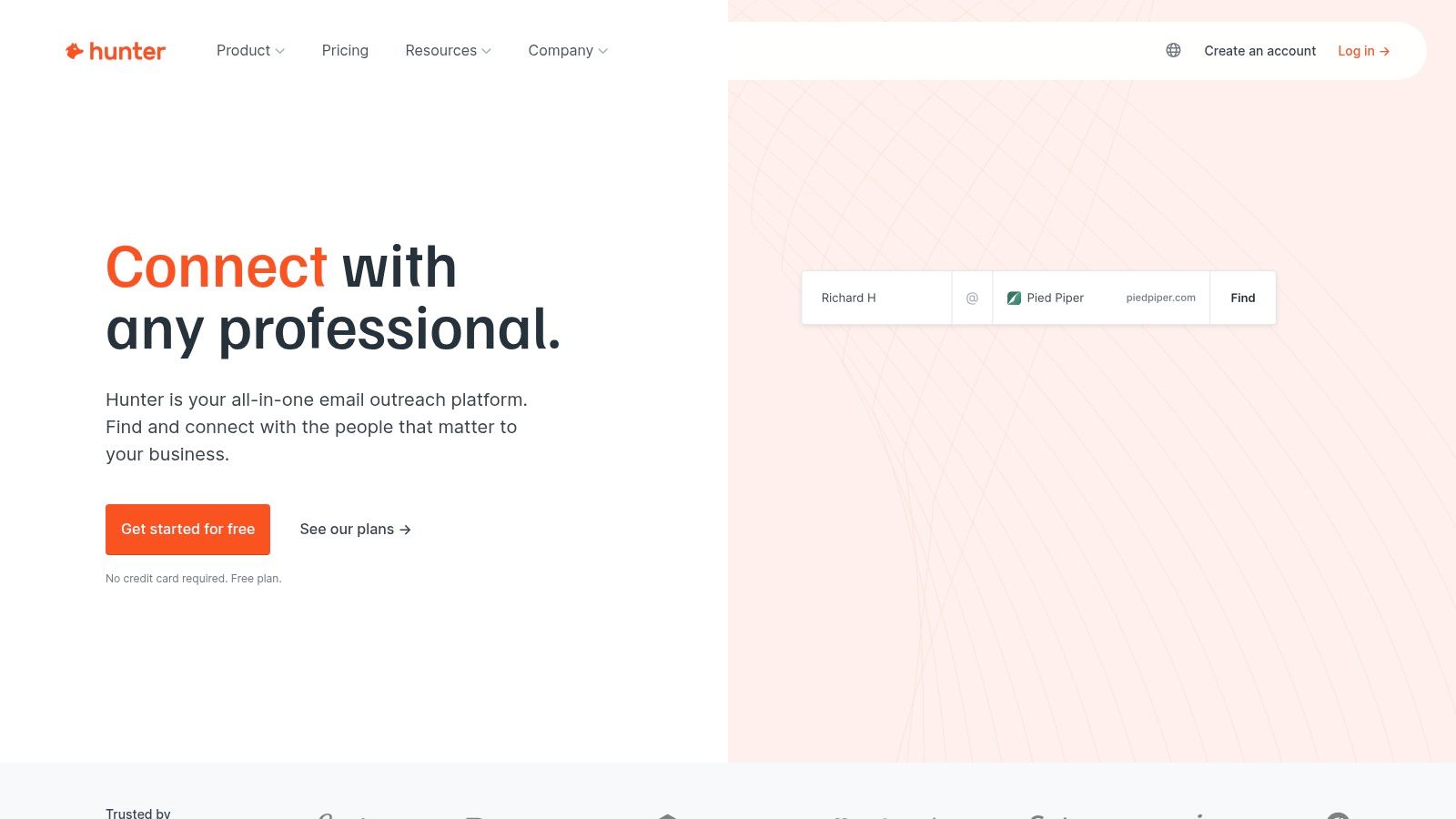
Hunter also offers a bulk email verifier to clean existing lists before a campaign. It includes a simple email sequencing feature that connects to your inbox for automated follow-ups. This mix of discovery, verification, and basic outreach makes it one of the most cost-effective sales prospecting tools for teams that run email-first outbound workflows.
Key Details & Pricing
Best for: SMBs and sales teams that need an affordable, straightforward tool for finding and verifying email addresses at scale.
Pros: Very cost-effective for email-first outbound efforts; strong verification capabilities reduce bounces.
Cons: Does not focus on phone data or deep organisational charts; better for SMB/mid-market than complex enterprise data needs.
Pricing: A free plan is available for 25 searches per month. Paid plans start at the Starter tier (£39/month). Growth and Pro plans offer more searches and features.
Website: https://hunter.io
9. lemlist
lemlist is a multichannel outbound platform built to run personalised outreach campaigns. It combines email, LinkedIn actions, and optional WhatsApp steps into a single sequence. This allows sales teams to connect with prospects on their preferred channels. Its key feature is a strong focus on deliverability. It has built-in email warm-up and sender rotation tools to protect domain reputation.
The platform also includes a B2B lead database and enrichment credits. This helps teams source and verify contact information within the tool. This makes it a good choice for sales development representatives (SDRs) who need an all-in-one solution for finding and engaging leads. Running A/B tests on email copy and subject lines is straightforward, giving users clear data on what messaging performs best.
Key Details & Pricing
Best for: SDRs and small sales teams wanting a single platform for multichannel outreach, lead sourcing, and deliverability management.
Pros: Strong multichannel sequencing in one place; enables personalisation with flexible add-ons for data.
Cons: Database quality depends on third-party sources; features like WhatsApp and advanced warm-up are paid add-ons.
Pricing: The Email Starter plan begins at $39/month. Sales Engagement plans, which include LinkedIn and cold calling features, start at $69/month per user.
Website: https://www.lemlist.com
10. Ramper
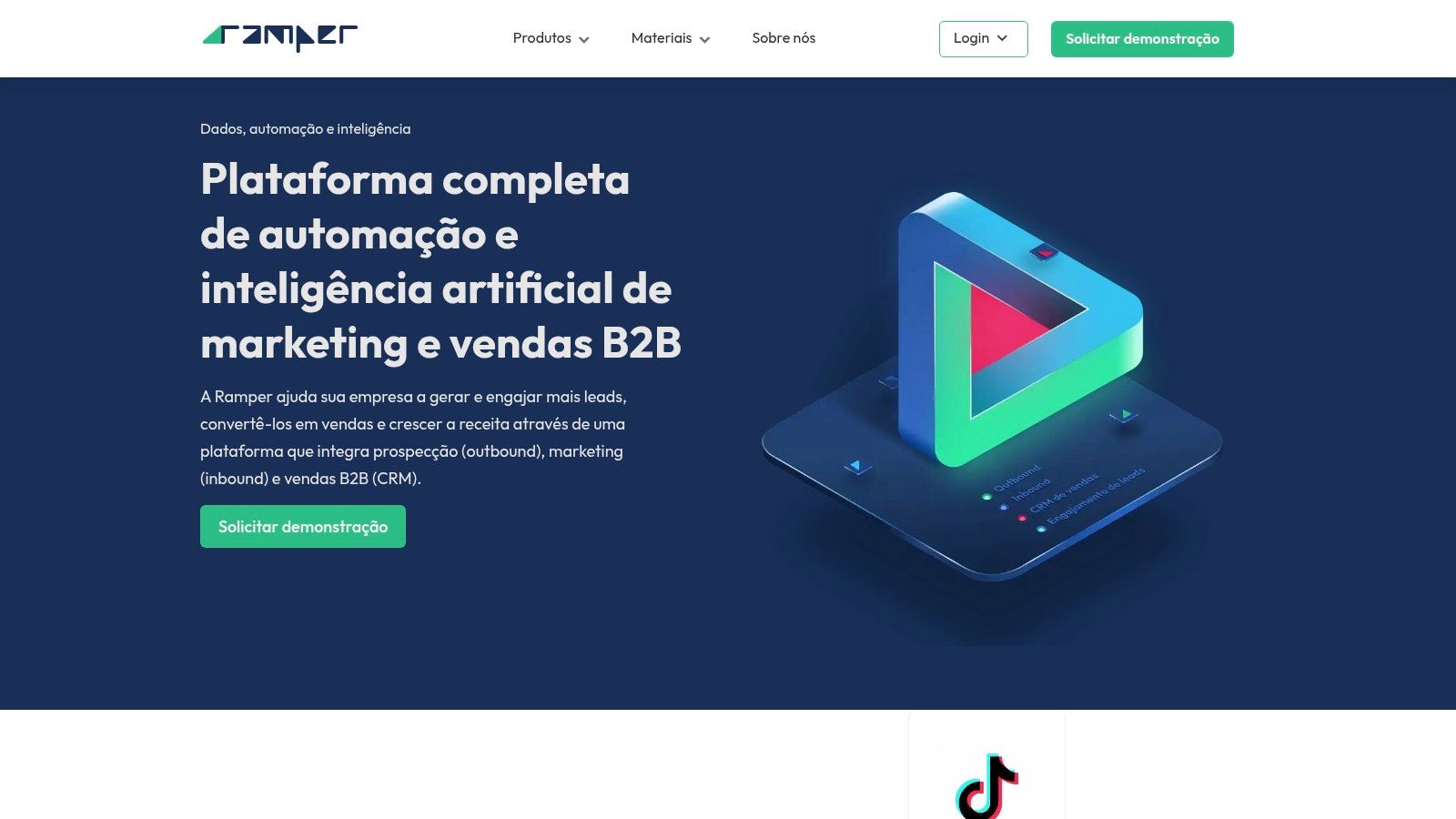
For teams targeting the Brazilian market, Ramper offers an integrated solution. It combines prospecting, marketing automation, and CRM functions. Its primary advantage is its deep focus on the local market. It provides B2B data and workflows designed for Brazil. This makes it one of the most effective sales prospecting tools for organisations navigating local business practices.
The platform allows SDRs to build lists from corporate social profiles and its own database. They can then manage the entire outbound process in one system. This includes building email sequences, scoring leads, and making calls from the interface. A key feature is its built-in support for LGPD (Brazil's data protection law). This includes workflows for managing data requests, ensuring teams remain compliant.
Key Details & Pricing
Best for: Sales teams focused on the Brazilian market who need an all-in-one platform with strong local data and LGPD compliance.
Pros: Native Portuguese language support and a strong focus on LGPD compliance; consolidates tools into a single platform.
Cons: International data coverage is limited; advanced analytics may require extra process work.
Pricing: Pricing is customised and provided upon request through a consultation with their sales team.
For teams in Brazil, using Ramper means simplifying the tech stack and aligning operations with regional regulations. To get the most from it, teams should map their entire lead-to-close process to its modules, replacing multiple tools with one unified workflow.
Website: https://ramper.com.br
11. Exact Sales – Exact Spotter
For organisations focused on the Latin American market, particularly Brazil, Exact Spotter offers a unified sales engagement platform. It combines a Big Data search engine with multi-channel outreach tools. This makes it one of the most effective sales prospecting tools for local go-to-market strategies. Its key differentiator is its integration of channels relevant to the LATAM market, including a built-in webphone and native WhatsApp cadences.
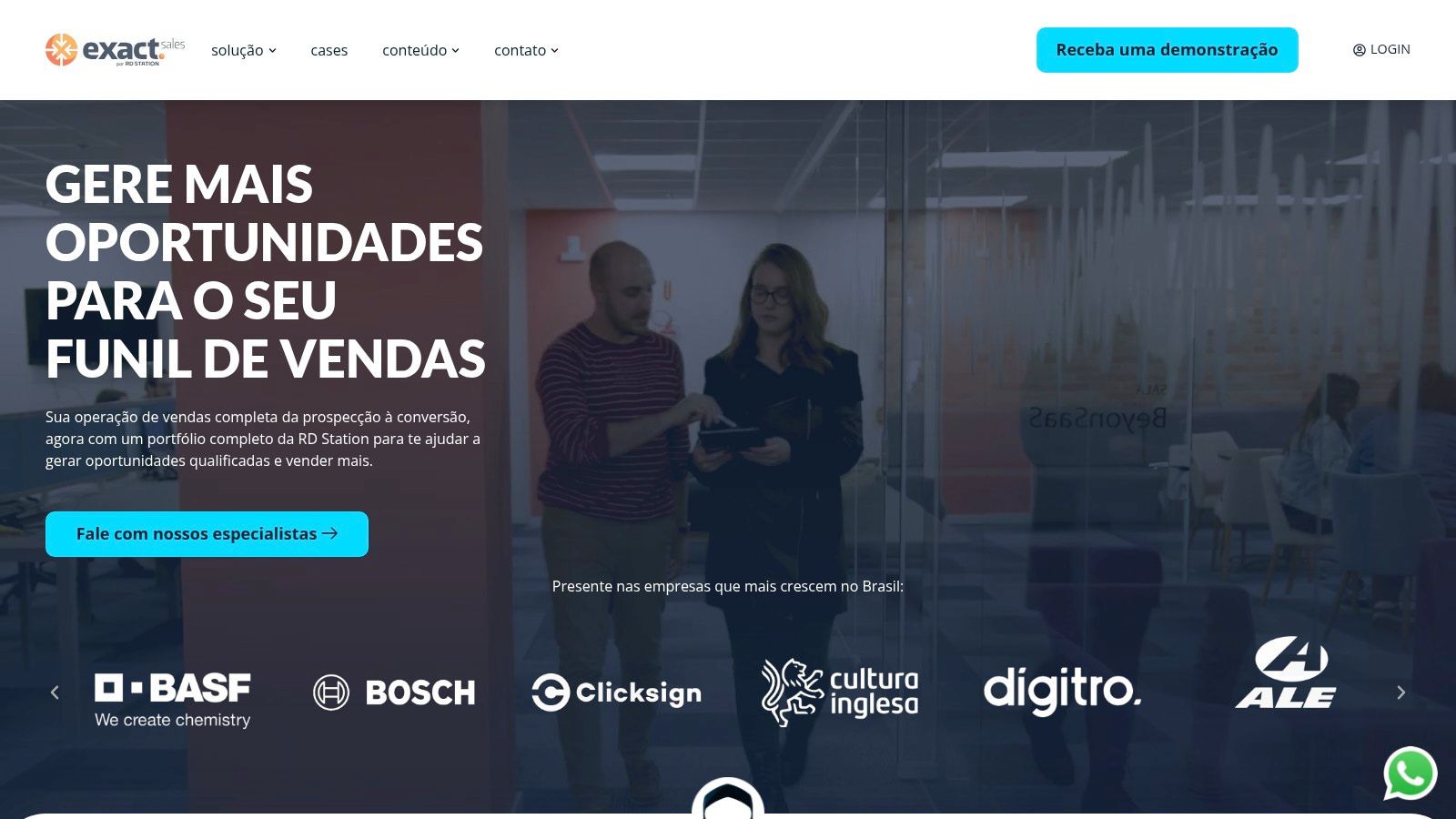
The platform supports the full prospecting cycle. It helps you find contacts using market dashboards and engage them through automated email and WhatsApp sequences. Features like the AI-powered "SDR Virtual" help automate lead capture and qualification. Its AI-driven meeting transcription and summary features help reps maintain accurate records. This all-in-one approach improves efficiency for teams in this region.
Key Details & Pricing
Best for: Sales teams executing a GTM motion in Brazil and Latin America who need a single platform for prospecting, multi-channel outreach, and call intelligence.
Pros: Feature-rich platform for Brazil-based teams; multiple communication channels (phone, email, WhatsApp) in one UI.
Cons: International datasets are not the primary focus; pricing and support are structured for the local market.
Pricing: Pricing is customised based on team size and required features. A consultation is required to receive a quote.
To get the best results, teams should use the platform's market dashboards to build targeted lead lists before launching their multi-channel cadences.
Website: https://exactsales.com.br
12. Econodata
For teams targeting the Brazilian market, Econodata is a purpose-built B2B database. Its primary strength is its filtering for Brazil-specific data. It allows sales professionals to segment prospects by region, sector, company size, and business establishment date. This regional focus makes it one of the most effective sales prospecting tools for this specific market.
The platform is designed for direct action. It offers unlimited searches and straightforward CSV or Excel exports for easy integration into existing workflows. Its database contains over 24 million Brazilian companies and profiles for more than 4.3 million decision-makers. This allows teams to quickly build targeted account and contact lists without a global tool that may have thinner coverage in Brazil. The self-serve "Lite" plans also make it accessible for smaller teams.
Key Details & Pricing
Best for: Sales teams of any size that need to source accurate B2B contact and company data specifically for prospecting within Brazil.
Pros: Strong data coverage and segmentation for the Brazilian market; clear and affordable BRL pricing on self-serve tiers.
Cons: Focused solely on Brazil, requiring another tool for global outreach; email and phone data coverage can vary.
Pricing: Self-serve Lite and Lite+ plans are available with clear monthly pricing in BRL. A Premium tier is offered for larger teams.
To get the most value from Econodata, sales teams should use its detailed filters to build localised campaigns. They can then enrich those lists with a separate tool for social signals before starting outreach.
Website: https://www.econodata.com.br
Top 12 Sales Prospecting Tools Comparison
Tool | Core features ✨ | Unique selling points 🏆 | UX / Quality ★ | Pricing / Value 💰 | Target audience 👥 |
|---|---|---|---|---|---|
LinkedIn Sales Navigator | ✨ Advanced search, saved lists, career/intent signals, CRM sync | 🏆 Unmatched B2B coverage & LinkedIn-native signals | ★★★★ | 💰 Seat-based; mid‑to‑high | 👥 AEs/SDRs, LinkedIn-first teams |
Apollo.io | ✨ Large contact DB, enrichment, sequences, dialer, CRM connectors | 🏆 All‑in‑one prospecting + outreach stack | ★★★★ | 💰 Transparent plans; credits scale cost | 👥 SMB / mid‑market SDRs |
ZoomInfo SalesOS | ✨ Deep org charts, direct dials, intent, visitor ID, add‑ons | 🏆 Enterprise-grade dataset & RevOps control | ★★★ | 💰 Premium; quote-based | 👥 Large GTM teams, RevOps |
Cognism | ✨ Global contacts, mobile verification, DNC/GDPR tooling, CRM integrations | 🏆 GDPR-first approach & phone-verified mobile data (EMEA) | ★★★★ | 💰 Custom/annual; varies by scope | 👥 EMEA-focused sales, compliance teams |
Lusha | ✨ Credit-based reveals, Chrome extension, CRM enrichment, free tier | 🏆 Fast rollouts for SDRs; simple lookups | ★★★★ | 💰 Affordable credits; free starter plan | 👥 SDRs, small sales teams |
Clay | ✨ Orchestrate 100+ sources, AI research (Claygent), enrichment, recipes | 🏆 Flexible data blending & advanced personalization | ★★★ | 💰 Credit-based; scalable (ops cost) | 👥 SDR ops, agencies, data teams |
Clearbit (Breeze/HubSpot) | ✨ Real-time enrichment, form shortening, visitor data, native HubSpot | 🏆 Tight HubSpot integration & routing | ★★★★ | 💰 Sold via HubSpot; requires paid HubSpot | 👥 HubSpot-centric marketing & RevOps |
Hunter | ✨ Domain/email finder, bulk verifier, sequencing, credits model | 🏆 Strong email verification; low bounce risk | ★★★★ | 💰 Very cost-effective; credit tiers | 👥 Email-first SMB SDRs |
lemlist | ✨ Email + LinkedIn + optional WhatsApp, deliverability tools, enrichment add‑ons | 🏆 High-scale personalization & deliverability | ★★★★ | 💰 Mid-range; add-ons for extras | 👥 SDRs running multichannel plays |
Ramper | ✨ Brazil prospecting, sequences, CRM & automation, LGPD support | 🏆 Localized LGPD compliance & all‑in‑one stack | ★★★ | 💰 Local BRL pricing; good regional value | 👥 Brazil-focused SDR/marketing teams |
Exact Sales – Exact Spotter | ✨ Big Data search, AI SDR Virtual, webphone, WhatsApp, meeting summaries | 🏆 AI SDR + multi-channel for LATAM | ★★★ | 💰 Local market pricing; regionally focused | 👥 Brazil / LATAM GTM teams |
Econodata | ✨ 24M+ BR companies, granular filters, exports, Chrome extension | 🏆 Deep Brazilian coverage & clear BRL tiers | ★★★★ | 💰 Affordable Lite tiers (BRL) | 👥 Brazil-focused prospectors & SMBs |
Building Your Prospecting Stack: From Tools to Workflow
We have explored a dozen powerful sales prospecting tools. Options range from comprehensive databases like ZoomInfo to specialised platforms like lemlist. The goal is not to adopt every tool. The objective is to build a technology stack that removes friction from your specific sales process.
Buying a tool based on its feature list alone is a common mistake. A better approach is to start by mapping your current prospecting workflow. Identify where your team loses momentum. Is it the time spent searching for contacts? Is it the low response rates from generic outreach? Is it the admin work of logging activities in the CRM? Once you pinpoint these bottlenecks, you can select tools that directly solve those problems.
Your Next Steps: A Practical Checklist
Choosing the right combination of sales prospecting tools requires a structured evaluation. Use this simple checklist to guide your decision-making process.
Audit Your Current Process:
Where do SDRs spend most of their non-selling time?
What is the biggest obstacle to hitting outreach volume targets?
Which part of the process relies most on manual data entry?
Define Your Core Need:
Do you need more leads (data acquisition)? Look at Apollo.io, Lusha, or ZoomInfo.
Do you need better engagement (outreach)? Consider lemlist or Ramper for sequencing.
Do you need deeper intelligence (context)? LinkedIn Sales Navigator and data enrichment from Clay are excellent starting points.
Do you need improved efficiency (automation)? Focus on tools with strong CRM sync and activity logging.
Prioritise Integration:
Your CRM is your sales operation's central hub. Any new tool must integrate with it. A prospecting platform that doesn’t sync contacts, accounts, and activities creates more work than it saves.
Check for native integrations with other critical tools in your stack, such as your dialer. This creates a connected system where data flows freely.
Run a Pilot Programme:
Never commit to a long-term contract without testing the tool. Select two or three top-performing reps to run a trial.
Establish clear success metrics before you start. This could be meetings booked, data accuracy, or time saved on admin tasks. Let the results determine the tool's value.
Building an effective prospecting stack is an ongoing process. The best tool for a five-person startup will be different from the one needed by a 100-person enterprise sales team. The key is to focus on the outcome: enabling your sellers to spend more time having meaningful conversations with the right people. By starting with your workflow and prioritising integration, you can build a prospecting engine that fills your pipeline and scales with your success.
As you build your prospecting stack, remember that logging call outcomes and notes in the CRM is a critical, yet often neglected, step. Samskit automates this by capturing key information from your sales calls and syncing it directly to your CRM, ensuring your data is always accurate and complete without the manual effort. Discover how you can close the loop between conversation and data by visiting Samskit.