
Inside sales used to mean cold-calling from a list. That image is outdated. Today, inside sales reps are tech-savvy professionals. They drive B2B revenue growth by closing complex deals from their desks.
What Modern Inside Sales Reps Actually Do
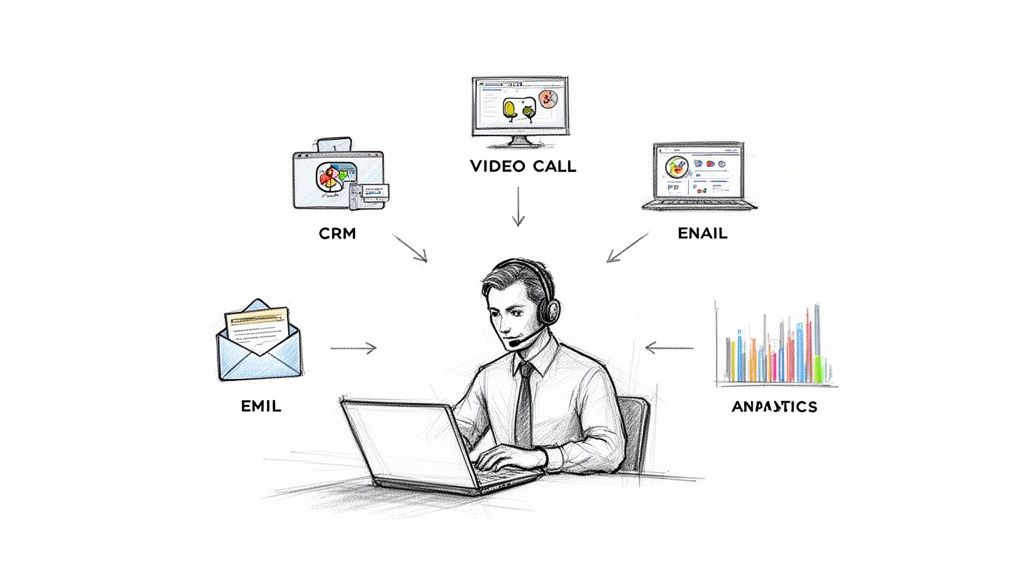
Think of an inside sales rep as a digital quarterback. They don't just make calls. They analyze the sales pipeline, work with marketing, and use a suite of digital tools to run strategic plays. This role is now a powerhouse in B2B sales.
The growth of this field is clear. For example, Brazil's broader trade sector employment grew for the third straight year in 2023. It reached 10.5 million formal jobs. This trend reflects a global move toward remote, digitally-driven sales roles.
The Shift from Field to Hub
The key difference is location. Outside sales reps travel to meet clients. Inside sales reps build relationships and close deals using video calls, emails, and social media. Their workspace is a command center, not a car.
This remote model offers several advantages:
Efficiency: Reps connect with more prospects because they don't travel.
Scalability: Teams can reach national or global markets from one office.
Cost-Effectiveness: Companies save on travel, lodging, and client entertainment.
This structure supports an organized, data-driven sales process.
A Strategic Role, Not a Support Function
People often mistake inside sales for telemarketing or lead generation. Some teams have specialists like Sales Development Representatives who only qualify leads. A true inside sales rep, however, often manages the entire sales cycle. They handle everything from first contact to closing the deal. Learn more about these differences in our guide on inbound vs outbound sales strategies.
An inside sales rep combines deep product knowledge with strong communication skills. They use a sophisticated tech stack to guide buyers through complex decisions. They act as consultative problem-solvers.
A Day in the Life of a Top Performer
To understand what an inside sales rep does, look beyond the job description. A top performer’s day is not chaotic. It is a structured mix of preparation, focused outreach, and relationship building. Their routine maximizes selling time and reduces administrative work.
The day starts with planning and research, not just making calls. The best reps check their CRM first thing. They identify priority leads and review overnight emails. They block out their calendars for specific tasks to create a clear plan.
The Morning Prospecting Block
The first few hours are for prospecting and follow-ups. This is the best time to reach people before their day fills with meetings. A typical morning includes warm and cold outreach, personalized emails, and targeted calls.
Success is about making the most of every call, not making the most calls. Preparation turns a cold call into a conversation.
A sharp rep uses a pre-call checklist. This ensures they add value from the start.
Review CRM History: Check all previous notes and interactions with the contact and their company.
Check Social Profiles: Look at LinkedIn for recent company news, personal posts, or mutual connections.
Define a Clear Objective: What is the single goal for this call?
Midday Demos and Discovery Calls
The middle of the day is often for scheduled appointments like discovery calls and product demos. The rep shifts from an opener to a consultant. A good discovery call is crucial. It uncovers a prospect's real problems and determines if they are a good fit.
Modern tools are essential here. A platform like Samskit can automatically join and record virtual meetings. It captures all important details. This lets the rep focus completely on listening to the customer, not on typing notes. As deals get larger, this active listening skill becomes more important. You can learn more about this in the difference between an SDR and an Inside Sales Rep.
Afternoon Follow-Ups and Admin
The end of the day is for wrapping up and preparing for tomorrow. This involves sending follow-up emails that summarize the conversation and outline next steps. Reps also update the CRM and plan for the next day. When systems automatically capture call notes, this admin block becomes shorter. This gives reps more time for strategic work that builds pipeline and closes deals.
The Skills and Metrics That Truly Matter
What separates a top-performing inside sales rep? It is not just charisma or call quotas. It is a specific mix of skills and a focus on metrics that drive results.
The most successful reps are not just good talkers. They are strategic thinkers who have mastered remote selling. These core skills are built through discipline and practice.
Core Competencies for Modern Reps
Today’s best inside sales reps blend interpersonal skills with a command of technology. This combination allows them to build rapport and guide prospects through the sales cycle without meeting in person.
Active Listening: This is more than being quiet while someone talks. It is hearing a prospect's unspoken needs and goals. This skill helps position your solution effectively.
Consultative Problem-Solving: Top reps act like trusted consultants. They ask smart questions to diagnose pain points. Then, they present their product as the specific solution.
Tech Fluency: Comfort with your tech stack is critical. Deep knowledge of your CRM, communication tools like Samskit, and sales intelligence platforms saves time for selling.
This workflow map shows a rep's day, broken into essential stages.
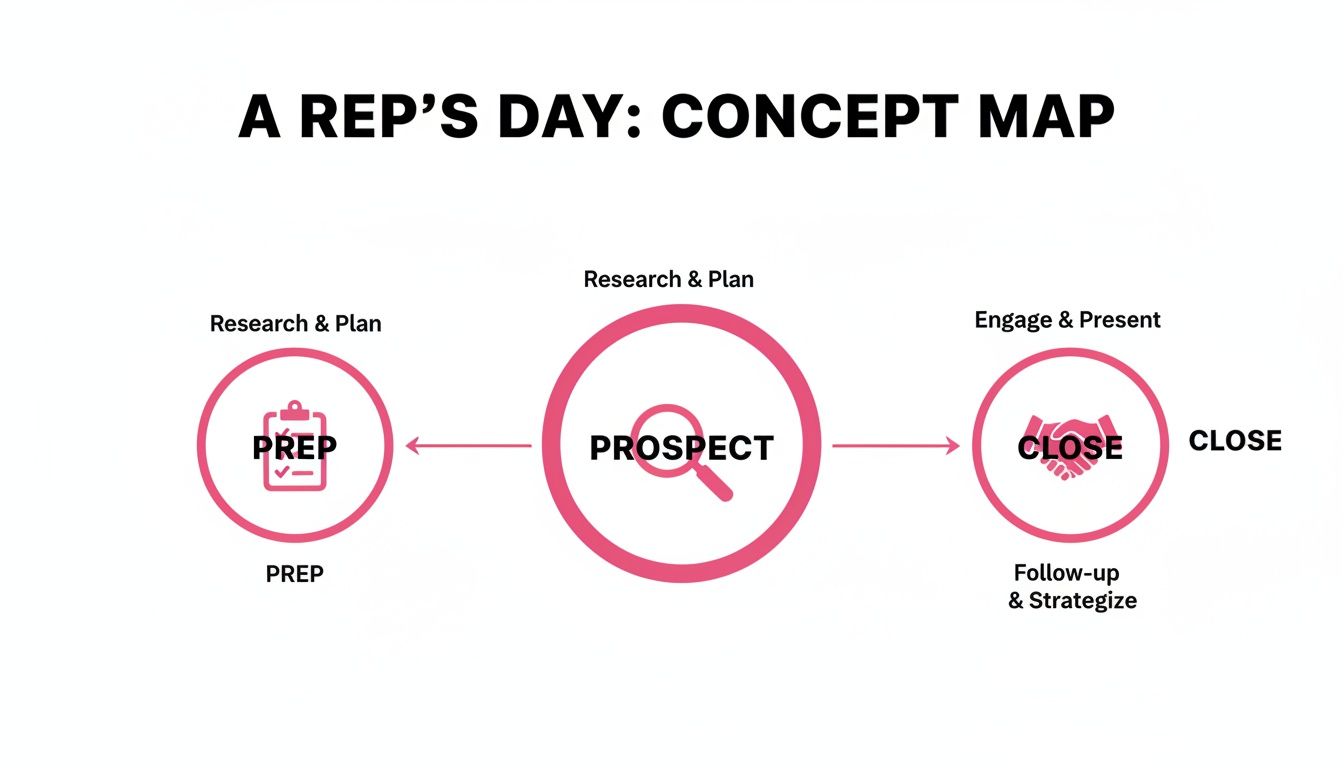
Mastering the right skills at each stage creates a repeatable, successful process.
Focusing on Actionable Sales Metrics
Skills are the engine, but numbers are the dashboard. It is easy to get distracted by "vanity metrics" that look good but don't correlate with revenue. The key is to focus on actionable Key Performance Indicators (KPIs).
Vanity metrics feel good. Actionable metrics lead to good decisions. Focusing on the right data helps build a predictable revenue engine.
Consider Brazil's direct selling market as a real-world example of growth. It is projected to grow from US$11,589.1 million in 2025 to US$19,041.1 million by 2033. Inside sales reps are a key part of this, using digital tools to reach a large customer base. You can find more details in these insights on Brazil's inside sales benchmarks.
To help you focus, it is important to know the difference between useful and misleading metrics.
Actionable KPIs vs Vanity Metrics for Inside Sales
Focusing on the right numbers helps you diagnose problems, recognize real wins, and build an efficient sales process. The table below compares metrics that drive results against those that can mislead your team.
Metric Category | Actionable KPI (What to track) | Vanity Metric (What to avoid) | Why It Matters |
|---|---|---|---|
Activity | Number of Meaningful Conversations | Total Dials or Emails Sent | High activity without engagement is just busywork. Meaningful conversations start the process of building a healthy pipeline. |
Pipeline | Pipeline Velocity | Total Pipeline Value | A large pipeline that doesn't move is useless. Velocity shows how quickly deals are progressing, indicating sales health. |
Conversion | Lead-to-Opportunity Conversion Rate | Website Traffic or Social Likes | This KPI shows if your team turns interest into qualified sales opportunities. It measures qualification effectiveness. |
Efficiency | Customer Acquisition Cost (CAC) | Number of Meetings Booked | CAC provides the bottom-line cost to acquire a new customer. It gives a clear picture of your sales process's financial efficiency. |
By pairing the right skills with a focus on these actionable KPIs, inside sales teams can generate predictable, sustainable growth.
How to Build and Structure Your Inside Sales Team
Building a strong inside sales team requires more than just hiring good salespeople. You need to design a system where they can succeed. The structure you choose affects efficiency, morale, and revenue. Getting the model right organizes your talent for maximum impact.
Your first decision is how to organize your team. There are two main approaches. Each has strengths depending on your sales process. Choosing the right one is the foundation for a scalable sales engine.
Comparing Team Structures
The two most common frameworks are the "assembly line" and the "pod." The assembly line uses specialists. The pod model creates small, self-sufficient units.
The Assembly Line Model: This structure divides the sales process into specialized roles. Lead Generation Reps find prospects. Sales Development Reps (SDRs) qualify them. Account Executives (AEs) close deals. This system works well for businesses with high sales volume and a straightforward process.
The Pod Model: A pod is a small, complete team. It usually includes an SDR, an AE, and a Customer Success Manager. They work together on the same accounts or territory. This approach fosters collaboration and is ideal for complex, long sales cycles where a seamless customer experience is crucial.
The best structure mirrors your customer's buying journey. For a quick, transactional journey, use an assembly line. For a long, consultative process, use a pod.
A Practical Hiring Checklist for Inside Sales Reps
Finding the right inside sales reps means looking for a specific mix of resilience, coachability, and communication skills. Use this checklist to focus your hiring process on traits that lead to success.
Define the Role Clearly: Are you hiring a hunter, a farmer, or both? Create a scorecard with 3-5 essential skills.
Use Behavioral Questions: Ask "Tell me about a time when..." to learn how candidates behaved in past situations.
Conduct a Role-Play: A short mock call shows how a candidate thinks on their feet. Can they listen? Can they handle objections?
Assess Tech Acumen: Ask about their experience with CRM systems and sales tools. You need people who can learn new tech quickly.
Check for Coachability: Ask about a time they received tough feedback and how they responded. Their answer reveals their openness to growth.
A Sample 30-60-90 Day Onboarding Plan
A structured onboarding plan sets a new rep up for success. It turns the first few months into clear, manageable steps that build confidence.
Here is a simple template:
First 30 Days: Product and Process Immersion
Week 1: Learn company culture, meet the team, and get set up on the tech stack.
Week 2: Deep dive into the product and the ideal customer profile.
Weeks 3-4: Shadow calls with top performers and start low-stakes outreach.
Days 31-60: Ramp Up and Active Selling
Objective: Begin managing a small number of inbound leads or a targeted outbound list.
Key Activities: Run discovery calls with a manager listening in. Receive regular feedback on call recordings.
Days 61-90: Full Productivity and Refinement
Objective: Hit initial quota targets and operate more independently.
Key Activities: Take full ownership of their pipeline. Identify areas for skill development.
Choosing the Right Technology for Your Team
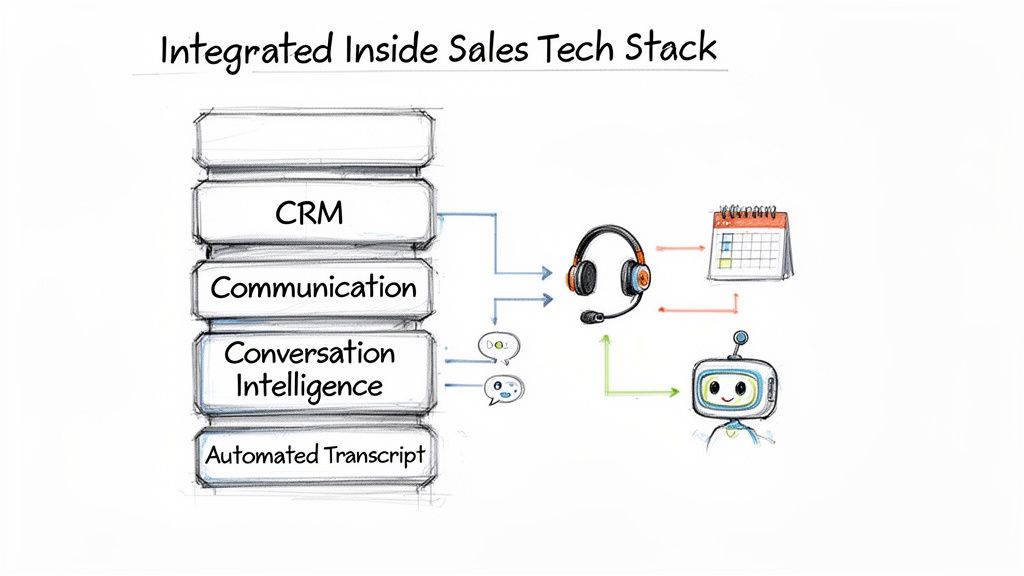
A high-performing inside sales team needs an integrated tech stack. The right tools act as a force multiplier. They automate repetitive tasks so reps can focus on building relationships and closing deals.
Without a solid tech foundation, reps get bogged down in administrative work. The goal is to build a cohesive system where data flows smoothly and insights are accessible. It starts with a few core components.
The Essential Tech Stack Components
Every top inside sales team uses a few key tools that work together. These are the essentials for efficiency and a clear view of your sales process.
Customer Relationship Management (CRM): This is your single source of truth. A CRM stores customer data, tracks interactions, and organizes your pipeline.
Communication Platforms: This includes your phone system, email clients, and video conferencing tools. Integration is key so reps can switch between channels easily.
Sales Intelligence Tools: These platforms provide data on prospects and companies. They help find new leads and identify decision-makers.
An effective tech stack is an interconnected ecosystem. When your CRM, communication, and intelligence platforms are connected, you give your team a complete view of every customer.
Automating Workflows with Conversation Intelligence
Manual CRM updates are a major time-sink for inside sales reps. After each call, they must recall details, type notes, and log the activity. This is time not spent selling.
Conversation intelligence platforms like Samskit solve this problem.
Samskit can automatically join, record, and transcribe sales calls on platforms like Google Meet. It analyzes the conversation to identify action items, objections, and next steps. The tool then creates a summary and syncs it directly to your CRM.
Consider the large market in Brazil. In 2023, 1.5 million companies with 10.5 million formal jobs generated R$7.1 trillion in net revenue. Remote inside sales reps are essential for this market. Automating their call logging provides a competitive advantage. You can learn more from these insights on Brazil's business landscape.
This automation changes a rep's day. Instead of spending 15 minutes on data entry, they can move to the next call. Managers also benefit. They get clear, unbiased insights from customer conversations, which makes coaching more effective.
Setting up your CRM properly is the first step. Our guide on CRM for inside sales can help. By reducing the administrative burden, you empower your team to operate at a higher, more strategic level.
Got Questions About Inside Sales? We've Got Answers
As inside sales grows, questions arise. Whether you are an aspiring rep, a manager, or a business leader, here are answers to some common queries.
What’s a Typical Career Path for an Inside Sales Rep?
The inside sales rep role is a launchpad for a career. It builds foundational skills in communication, problem-solving, and process management.
A common next step is moving to an Account Executive (AE) position. This is a transition from qualifying leads to owning the full sales cycle and closing deals.
After mastering the AE role, several paths open up:
Move into Leadership: Become a Sales Manager or Director to coach and guide a team of reps.
Take on Bigger Deals: Move into senior or enterprise sales roles, managing larger, more strategic accounts.
Specialise Your Skills: Use your expertise in other roles like Sales Engineering (technical product knowledge) or Revenue Operations (RevOps) to optimize the sales process.
How Do You Actually Measure the ROI of an Inside Sales Team?
Measuring the return on investment (ROI) of your inside sales team is essential. It proves the team's value to the business. You compare the revenue your team generates against its costs.
The basic formula is: (Gross Profit from Sales - Total Team Costs) / Total Team Costs.
To get an accurate ROI, "Total Team Costs" must include more than salaries. Factor in:
Commissions and bonuses
Software subscriptions (CRM, dialers, etc.)
Training and development expenses
General overhead costs
A powerful metric is the ratio between a customer's Lifetime Value (LTV) and their Customer Acquisition Cost (CAC). A healthy LTV to CAC ratio, such as 3:1 or higher, shows your inside sales team is a profit center, not a cost center.
What Are the Biggest Challenges Reps Face Today?
Cutting through the noise is one of the toughest challenges. Decision-makers receive many emails, messages, and calls. Building trust without meeting in person is difficult.
Administrative work is another major challenge. Manually updating the CRM, logging call notes, and writing follow-up emails consume a lot of time. Every minute spent on admin is a minute not spent selling.
The mental aspect of the job is also tough. Facing rejection and staying motivated requires resilience. This mental fortitude often separates good reps from great ones.
How Has the Role of an Inside Sales Rep Changed Over the Years?
The role has changed dramatically. It has evolved from a high-volume, transactional job to a strategic, consultative profession. A decade ago, "inside sales" was often another term for telemarketing. That is no longer true.
Today’s inside sales reps are tech-savvy professionals who manage complex sales cycles from their desks. They conduct virtual demos, use data to personalize outreach, and close large deals without a handshake.
Technology has blurred the lines between inside and outside sales. It empowers reps to be trusted advisors from anywhere. The focus has shifted from the quantity of calls to the quality of each conversation.
Stop wasting valuable selling time on manual data entry. Samskit turns your customer meetings into reliable CRM updates and clear next steps, automatically. By capturing, transcribing, and summarising every sales call, Samskit gives your reps more time to sell and provides managers with the insights they need to coach effectively. Discover how you can build a more efficient and data-driven sales team at https://samskit.com.