
A Quarterly Business Review (QBR) is more than just another meeting. It is your best chance to prove your value and strengthen your client partnership.
Think of it as a collaborative strategy session. It is a dedicated time to review the big picture and plan your next steps together. This is not a quick update call; it is a health check for your business relationship.
What a QBR Is (and Why It’s Important for Growth)
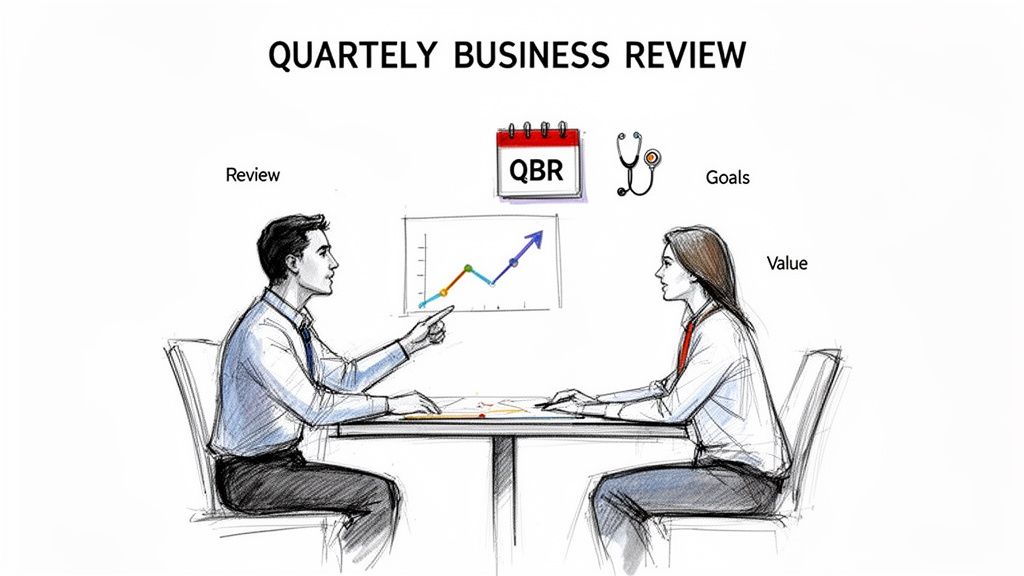
Do not treat a QBR like a reactive account update. An effective QBR is a forward-looking conversation about strategic goals. It moves the discussion from fixing problems to building a better future together.
The main point is to show the value you provide. When you present data showing how you helped your client meet their targets, you become a partner, not a vendor. This shift builds trust and lasting relationships.
The Core Goals of a QBR
A well-run QBR impacts your retention and expansion revenue. It is designed to achieve several specific outcomes:
Showcase Value and ROI: Use concrete metrics and performance data. Show exactly how your solution has improved their business.
Strengthen the Partnership: These meetings align everyone's expectations. You and your client agree on what is important for the months ahead.
Spot Growth Opportunities: Conversations about future goals often uncover new client challenges. This creates an opening to discuss how you can help more, leading to upsells or cross-sells. In Brazil's B2B e-commerce sector, which is growing at a 18.42% CAGR through 2031, understanding a client's expansion plans is key.
Identify Risks: A QBR is the right time to spot potential problems, like low product usage or a change in their company’s direction, before they lead to churn. Improving client outcomes is fundamental to boosting your Net Dollar Retention, a key metric for any subscription business.
A QBR uses past performance data to create a joint strategy for the next quarter. This ensures the partnership continues to deliver results.
Let’s compare a proper QBR with a casual check-in call.
Strategic QBR vs. Reactive Check-In
The difference between a strategic QBR and a reactive check-in is significant. One builds partnerships and drives growth; the other just maintains the status quo.
Element | Strategic QBR | Reactive Check-In |
|---|---|---|
Goal | Align on long-term strategy, show ROI, and plan for future growth. | Address immediate support issues, give quick updates, and solve problems. |
Focus | Forward-looking and proactive, centered on business objectives. | Backward-looking and reactive, focused on recent activities and tickets. |
Conversation | A two-way dialogue between strategic partners about shared goals. | A one-way update from vendor to client about service status. |
Outcome | A clear action plan for the next quarter with defined goals. | Resolved tickets and a list of immediate follow-up tasks. |
A reactive check-in solves today's problems. A strategic QBR builds a stronger, more aligned future together.
Assembling the Right Team for Your QBR
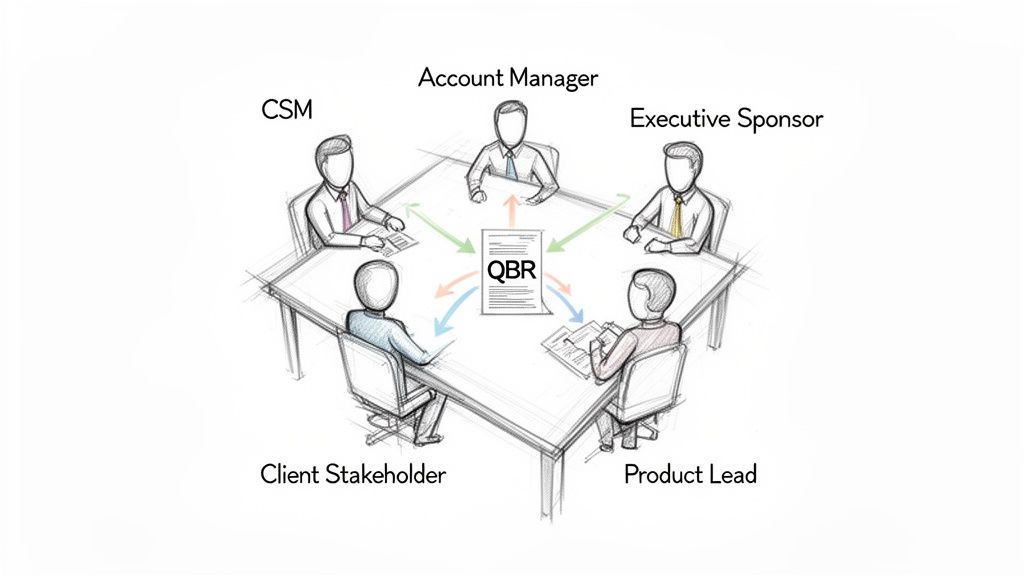
The success of a QBR depends on having the right people in the room. If the attendee list is wrong, a strategic meeting can become a tactical problem-solving session.
The attendee list needs to reflect the meeting's strategic importance. You need decision-makers at the table who can approve new ideas and connect your work to the client's larger goals.
Who Should Be on Your Team
Your internal team sets the stage. Bringing the right people from your side shows you are serious about the relationship.
Account Manager or Customer Success Manager (CSM): This person leads the discussion. They own the client relationship and should know the client's history and goals.
Executive Sponsor: For your most important accounts, having a senior leader from your company join sends a powerful signal of commitment.
Product or Technical Lead: If the client has technical challenges, bring an expert. This builds trust and provides credible answers.
Securing the Right Client Attendees
Getting senior stakeholders from the client’s side to attend can be difficult. You must make it clear why this meeting is worth their time.
Frame the invitation around their goals, not yours. Do not just say you are holding a QBR. Explain how the session will help them improve ROI or solve a critical business problem. To learn more about a related role, see our guide on the modern Inside Sales Representative.
To get a decision-maker to attend, send a concise email. Outline the key strategic topics and the specific decisions that will be made. Highlight why their input is essential.
When you assemble a strategic team from both sides, your QBR becomes a catalyst for growth.
Building an Agenda That Delivers Results
A great Quarterly Business Review is driven by a great agenda. Without a clear structure, meetings can get sidetracked. A solid agenda is your roadmap. It keeps the discussion strategic and shows you respect everyone’s time.
Think of the agenda as the script for your meeting. Each section should flow logically to the next. This structure turns a routine check-in into a results-focused strategy session. A prepared agenda also shows professionalism and sets a collaborative tone.
A 5-Step Framework for a High-Impact QBR Agenda
Build your discussion around five core pillars. This framework guides the conversation from reviewing past performance to planning for the future.
Here’s a practical, step-by-step framework you can use.
Executive Summary and Goal Alignment (5–10 minutes): Start with the big picture. Recap the client’s main business goals and the purpose of the meeting. This ensures everyone is on the same page.
Review of Past Quarter's Performance (15–20 minutes): Present the data. Focus on key performance indicators (KPIs) that relate to their goals. Show trends, celebrate wins, and be open about any challenges.
Value Realization and ROI Showcase (15–20 minutes): Connect performance data to business outcomes. Do not just show usage stats. Demonstrate their return on investment (ROI). For example, show how your solution saved them X hours or cut costs by Y%.
Joint Discussion on Challenges and Opportunities (10–15 minutes): Shift from presenting to collaborating. Ask about their upcoming priorities and potential roadblocks. Listen carefully to discover new ways you can help.
Define the Future Roadmap and Goals (10–15 minutes): End with a clear, actionable plan. Work together to set specific, measurable, achievable, relevant, and time-bound (SMART) goals for the next quarter. Document every action item, assign an owner, and agree on deadlines.
The goal is to use past insights to co-create a plan for future success. A strong agenda makes this transition from review to strategy smooth and effective.
This structure provides a practical answer to the question "what is qbr " - it is a strategic alignment tool. It keeps the conversation focused on driving results and strengthening the partnership.
Actionable QBR Agenda Template
Here is a template you can adapt for each client. Use it as a blueprint for a successful QBR.
Section | Time Allotment (Mins) | Objective & Key Metrics |
|---|---|---|
1. Welcome & Goal Alignment | 5–10 | Reconfirm client business objectives. Briefly review the meeting's purpose. |
2. Last Quarter's Performance Review | 15–20 | Present data on KPIs against targets. Show successes (e.g., 25% increase in user adoption) and discuss missed goals. |
3. Value & ROI Showcase | 15–20 | Connect metrics to business value. For example, show how £10,000 in cost savings were achieved. |
4. Collaborative Strategy Session | 10–15 | Discuss upcoming challenges, new business priorities, and potential growth opportunities. |
5. Next Quarter's Roadmap & Action Items | 10–15 | Define 2-3 SMART goals for the next quarter. Assign owners and deadlines for all action items. |
This template provides a reliable framework. It balances reviewing the past with planning for the future. By allocating specific times, you keep the meeting on track.
Common QBR Mistakes and How to Avoid Them
Knowing what not to do is as important as knowing what to do. A poorly run QBR can waste time and damage your client relationship. You can avoid common pitfalls with some planning.
Teams often make the same mistakes. They might start selling, get sidetracked by minor issues, or present too much data without a clear narrative. These mistakes are easy to avoid.
Mistake 1: Turning the QBR into a Sales Pitch
This is a fast way to lose trust. The QBR is a strategic session about the value you have already delivered, not a time to push an upsell.
How to Avoid It: Frame the conversation around your client's goals. Instead of saying, "You should buy our new feature," try, "You mentioned wanting to boost efficiency by 15%. One of our new tools might help you hit that number." This approach centers the discussion on their success.
Mistake 2: Focusing Only on the Past or Negatives
Another common mistake is spending the whole meeting looking backward. A QBR that feels like a history lesson or a complaint session misses the point. It must be forward-looking.
How to Avoid It: Use the 80/20 rule. Spend no more than 20% of your time reviewing past events. Dedicate the other 80% to the future—discussing goals, exploring opportunities, and planning next steps.
A QBR uses past performance to launch future strategy. The conversation must move from "what happened" to "what's next."
Mistake 3: Ending Without a Clear Action Plan
This is a critical mistake. If everyone leaves unsure of who is doing what and by when, you have wasted their time. All the momentum is lost.
How to Avoid It: Reserve the last 10 minutes of the meeting for action items. Recap key decisions and define clear next steps. Assign each action item to a specific person with a realistic deadline. Send a follow-up email with these details to all attendees within 24 hours. This ensures accountability.
How to Streamline Your QBR Workflow with Technology
Running an effective QBR requires a lot of preparation. Digging for data and aligning the team can take hours. The right technology can handle the administrative work. This allows your team to focus on delivering a strategic review.
Modern tools provide a reliable history of the client relationship by capturing every interaction. Instead of guessing, your team gets a clear picture of the client's journey. This foundation helps you conduct a QBR that addresses real challenges.
Automating the QBR Lifecycle
Technology can assist at every stage. Tools like Samskit can automatically record and transcribe customer meetings. Its AI analyzes these conversations to extract important details.
This process saves time and uncovers critical intelligence:
Client Goals and Priorities: AI identifies objectives mentioned in previous calls. This ensures your QBR agenda is relevant.
Product Feedback and Issues: It flags recurring pain points or feature requests. You can prepare solutions before the meeting.
Identified Risks and Objections: The system captures potential churn signals early. This gives you time to prepare a strategic response.
This workflow helps you avoid common QBR mistakes. The diagram below shows errors that a tech-driven workflow prevents.
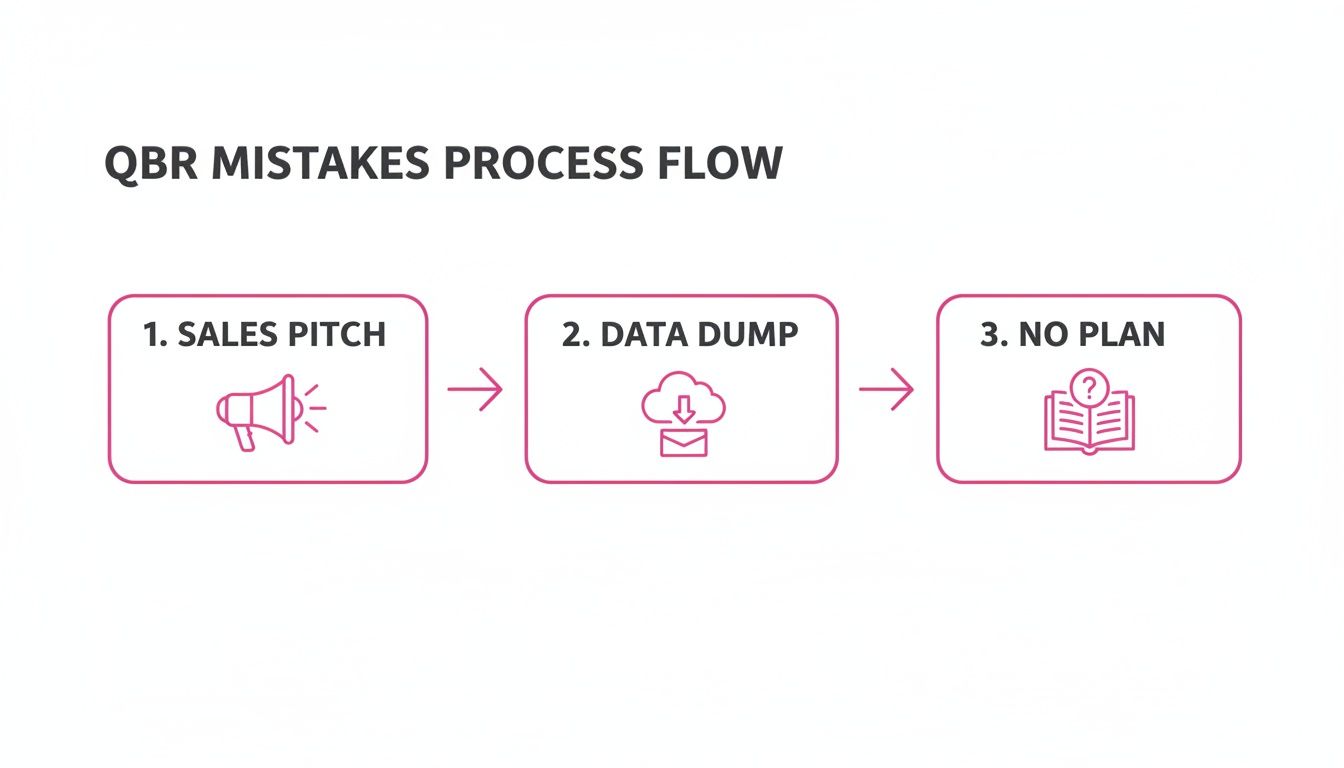
By automating data capture and insight generation, your QBR avoids becoming a sales pitch, a data dump, or a meeting without a plan.
From Preparation to Action Items
This automated approach changes how you run the QBR. Your team can review concise, AI-generated summaries instead of re-watching calls. During the meeting, the system captures new commitments and decisions.
After the QBR, it automatically creates a summary and syncs action items to your CRM. This creates a closed-loop system where every task is tracked. Brazil's Industry 5.0 market, focused on automation and AI, is projected to hit USD 7,869,330.2 million by 2030, according to Grand View Research.
Automating the QBR process improves data accuracy. It frees your team to focus on delivering a strategic, value-driven conversation.
This improves the quality of your business reviews. They become tools for customer retention and growth. To improve your strategic planning, see our guide on forecasting with Power BI.
Frequently Asked Questions About QBRs
Here are answers to some common questions about Quarterly Business Reviews. Clearing these up will help you feel more prepared for your next QBR. These practical details can make a significant difference.
How Often Should a QBR Happen?
The "Q" stands for quarterly, but this is a guideline. For your most strategic accounts, a 90-day cycle is usually effective. It is frequent enough to maintain momentum.
For other clients, a semi-annual review might be better. The goal is to have a regular, valuable conversation. Adjust the frequency based on the client's needs.
A QBR is about strategic alignment. The right frequency strengthens the partnership without causing meeting fatigue.
What Is the Difference Between a QBR and a Check-in?
A check-in call is tactical. It is about immediate issues like a support ticket or a status update. It is reactive.
A QBR is strategic and forward-looking. You use performance data from the last quarter to plan for the next one. A check-in solves today's problems; a QBR builds tomorrow's partnership.
What Is the Ideal Length for a QBR Meeting?
Aim for 60 to 90 minutes. This allows enough time to cover past performance, have a strategic discussion, and agree on next steps.
Send a clear agenda in advance. This ensures everyone comes prepared. For your most complex accounts, you might need more time, but 90 minutes is a solid benchmark for a focused QBR.
Turn your customer meetings from simple updates into strategic assets. Samskit automatically captures every detail, extracts critical insights, and updates your CRM. This gives you the evidence-based foundation to run QBRs that truly strengthen relationships and drive growth. Discover a smarter way to manage your customer conversations at https://samskit.com.